Women over 50 years old are at higher risk for osteoporosis, a condition that weakens bones due to tissue loss, making them more fragile and prone to fractures.
Since women naturally have thinner bones than men, they become more susceptible to bone loss with age. Hormonal changes caused by menopause and vitamin deficiencies are also common causes of brittle bones. Bone densitometry, also known as dual-energy x-ray absorptiometry or DEXA, is a specialized imaging test that measures bone density and helps detect osteoporosis early. By evaluating bone health, this test can help guide preventive care and treatment.
What Is Bone Densitometry?
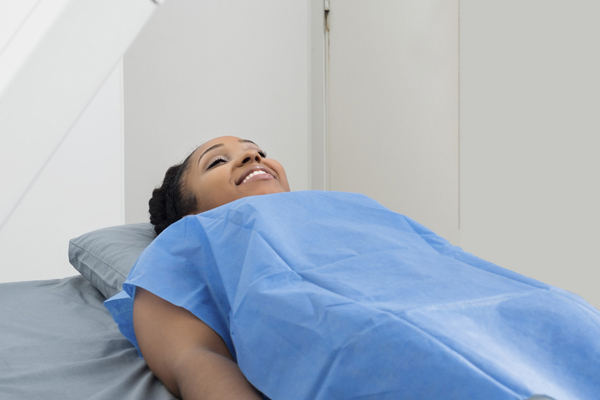
DEXA is a non-invasive scan that can accurately diagnose osteoporosis. The procedure involves simple imaging with x-ray technology. In real-time, bone density measurements are displayed on a computer monitor. Our advanced women’s imaging radiologists then analyze these numbers for density levels. A DEXA test can also assess future fracture risk – if a patient were to fall, are fragile bones more likely to cause serious injury?
Who Should Have This Procedure?
Women who have gone through menopause should absolutely have this procedure performed to assess risk. Although a small number of men and children can develop osteoporosis, the target of this medical condition is women over age 50.
Other instances in which someone should have a DEXA scan include:
- Family history (personal or maternal) of hip fracture or osteoporosis
- Tall and/or thin post-menopausal females
- Taking medications that can cause bone loss
- Having a thyroid condition
- Having type 1 diabetes, liver or kidney disease
What You Can Expect
The only special preparation required before bone densitometry is not taking calcium supplements within 24 hours of the scan. Most commonly, the lower spine or hips are screened for bone mass. Patients are advised to wear loose and comfortable clothing that does not have any metal clasps. Other personal objects like eyeglasses and jewelry should be removed too, as these items can interfere with x-ray imaging.
Is Bone Densitometry (DEXA) the right procedure for you?
Contact us to make an appointment today!